

UK Guidebook
Currency and Credit Cards
The official currency of the United Kingdom is the British Pound (£). You should not expect to be able to use US Dollars in the United Kingdom, and most businesses do not accept Euros used elsewhere in Europe.
Credit/Debit Cards
As in the United States, virtually all businesses in the UK accept credit and debit cards, and many businesses do not accept cash. Visa and Mastercard-branded cards are accepted most places, and American Express is accepted in many places.
Prior to the trip, you may wish to consider obtaining a travel-type credit card. These cards typically offer no foreign transaction fee, and may come with other benefits such as basic travel insurance, trip delay coverage, and similar perks. Credit cards generally also offer better fraud protection in the event that your card is lost or stolen.
Cash
While cash is generally not needed as virtually all merchants accept credit/debit cards, many pilgrims choose to have a small amount of cash to use during the trip. There are several options for obtaining British Pounds
Electronics
As a general rule, you will need few if any electronics for the pilgrimage beyond a cell phone.
Of course, you are welcome to bring additional devices such as cameras, laptops/tablets, e-readers, etc. However, we encourage you to think carefully about what items you will actually need during the pilgrimage as electronic devices add weight, complexity at airport security, and run the risk of being lost, stolen, or damaged.
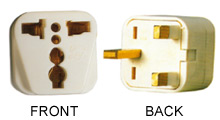
Power connections in the UK have a different voltage and plug style than in the US, so make sure you bring a suitable travel adapter. Adapters can be purchased relatively inexpensively from most major retailers such as Amazon, Target, or Walmart, as well as from many retailers in the UK.
Staying in Touch
Our primary means of communication ahead of and during the pilgrimage will be via WhatsApp. WhatsApp is a free app that can be downloaded for iOS or Android phones, and works well using either a cell connection or wi-fi.
Riding the Tube
The primary form of public transport in London is the subway, also known as The Tube or the London Underground. You will often see public transport generally referred to as TfL, or Transport for London.
You can pay your fare using a contactless credit card, travelcard, or ticket. If your credit card supports contactless payments, this is often the easiest way to pay as you just tap your card at the turnstile. If you’ll be paying with cash, ticket machines are available at Tube stations.
TfL offers an app that can help you plan your journey, and navigation apps such as Apple or Google Maps can also be helpful. Visit the TfL Website or TfL Go app for more details about topics like fares and service disruptions that may impact your journey.
If you will be riding The Tube, there are some tips that will help your trip go smoothly:
- Do not bring more luggage than you can safely carry on your own.
- If travelling with a backpack, take it off and stand over it on the carriage or move it under your seat to take up less room.
- Be aware of busy times for the Tube, particularly during the morning and evening rush hours.
- Allow departing passengers to exit the train before boarding.
- The Tube is not air conditioned, so be sure to bring water and wear cool clothing during the summer months.
- Practice basic security measures and be aware of your surroundings, particularly at larger stations.
- As you enter and exit Tube stations, stand on the right and walk on the left of escalators.
- Stand behind the yellow line on station platforms.
Tipping and Service Charges
Tips are much less prevalent in the UK than in the US, and service charges are often included in bills in places such as hotels and restaurants. It is always a good practice to see if a service charge is included before tipping, and if one is then no tip is generally expected.
If you do choose to tip, a customary tip is 10% to 15% of the bill, or a smaller cash tip in places like coffee shops.
- SIM/eSIM
- Currency
- Credit cards
- Wi-Fi
- Air conditioning
